Cheerleading Photography: Why This Sport Finally Deserves Better Coverage
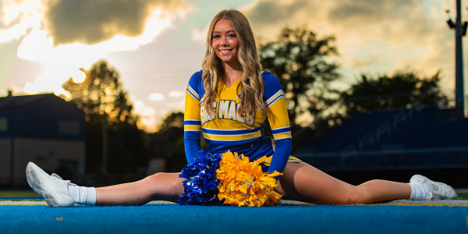
Cheerleading is one of the most visually dynamic sports in any school's athletic program. The stunts, the formations, the synchronized movement, the athleticism required to execute a routine under pressure in front of a crowd — all of it translates powerfully to camera when the photographer actually knows what they're doing. The problem is that cheerleading photography has historically been treated as a secondary concern, squeezed in around the "real" sports and covered with whatever attention is left over. That approach produces exactly the kind of images you'd expect from it. Here's what serious coverage looks like instead.
Why Cheerleading Photography Gets Shortchanged
Part of the reason cheerleading photography gets underserved is perception. Many schools and programs still categorize cheerleading as support activity rather than a sport in its own right, which means it sits lower on the photography priority list. In Pennsylvania, competitive cheer runs from the start of the fall season through the PIAA Competitive Spirit Championships in December. The demands on those athletes match anything else in the building.
PIAA classifies competitive spirit as its own championship sport with defined seasons, classifications, and qualifying standards. Programs at Canon-McMillan and across Washington County compete seriously for district and state recognition. That level of competition deserves coverage that reflects it, not an afterthought from a photographer who doesn't know what a basket toss is supposed to look like in frame.
Sean Conner at Photo Dad Sports Photography covers competitive spirit with the same preparation and positioning instincts applied to every other sport on the schedule. That means understanding the routine structure, anticipating the peak moments, and delivering a gallery that does justice to what these athletes actually do.
The Technical Demands of Covering Competitive Spirit
Competitive cheer routines happen fast and in defined sequences. Stunts peak and resolve in seconds. Formations shift across the mat or floor continuously. A photographer unfamiliar with routine structure tends to arrive at each moment a beat late, capturing the landing rather than the apex, the recovery rather than the throw.
The equipment requirements mirror other fast-movement sports. Shutter speeds of 1/1000th of a second or faster are necessary to freeze a flyer at the top of a stunt cleanly. Wide apertures handle the indoor lighting conditions typical of gyms and competition venues. And burst mode through the peak moments of each skill gives the best chance of capturing the one frame where every element is perfectly aligned.
Positioning matters as much as settings. For sideline cheer at football games, the best angles track the squad's relationship to the field and the crowd. For competitive performances, a slightly elevated angle looking across the mat captures the full formation without flattening perspective the way a floor-level shot often does.
Sideline Cheer vs. Competitive Cheer: Two Different Assignments
Sideline cheerleading and competitive cheerleading are distinct in ways that affect how they should be photographed.
Sideline coverage is more reactive. The squad is responding to game situations, crowd energy, and the flow of the event around them. The best sideline images capture the relationship between the cheerleaders and the game they're supporting — the way a crowd reacts to a big stunt, or the energy of a huddle during a timeout on the field.
Competitive coverage is more structured. The routine has a defined arc, and a photographer who has reviewed the routine in advance, or at minimum watched a previous performance, knows which moments are worth positioning for. The opening sequence, the pyramid build, the tumbling pass, the closing formation — these are predictable enough that a prepared photographer can plan their angle for each one rather than improvising through the entire routine.
Photo Dad Sports Photography approaches both formats intentionally, adjusting positioning strategy and timing expectations based on what type of coverage is actually needed.
What a Strong Cheerleading Portrait Session Looks Like
Portrait sessions for cheerleading squads follow the same core principles as any team photography, with a few sport-specific additions worth planning for.
• Full squad photo in a formation that reflects the team's identity, not just a standard row arrangement
• Individual portraits in uniform, with both posed and more natural expressions captured
• Action-style portrait shots that incorporate signature skills or stunts, done safely and with proper spot coverage
• Consistent lighting that works for the full range of complexions on the squad
• Delivery formats suitable for yearbook, program rosters, and social media
Programs that incorporate custom sports banners into their team identity should plan portrait sessions with banner dimensions and layout in mind, so the images delivered are usable across all the formats the program needs without additional cropping or reformatting work.
How Programs Can Make Coverage Work Better
A few practical steps on the program side consistently improve the results from both game coverage and portrait sessions.
• Share the competition schedule early so the photographer can plan around district and state events
• Provide the routine order of events for competitive performances so peak moments can be anticipated
• Brief squad members on what to expect before portrait sessions, particularly for action-style stunt shots
• Coordinate with the athletic department on any access or credential requirements at competition venues
• Flag yearbook and senior night deadlines early so portrait delivery timelines can be planned accordingly
Frequently Asked Questions
Does Photo Dad Sports Photography cover both sideline and competitive cheerleading?
Yes. Both formats are covered, with different positioning and timing strategies applied to each. Competitive coverage is most effective when the photographer has advance information about the routine structure, which we request for any competitive performance booking.
When does competitive spirit season run in Pennsylvania?
PIAA Competitive Spirit begins with the fall sports season and runs through the state championships in December. Programs typically compete in invitational events throughout October and November before district qualifying. The schedule varies by program, so it's worth confirming specific dates when booking.
Can cheerleading photography be bundled with other sports coverage?
Yes, and this is often the most practical arrangement for schools and booster clubs managing multiple sports simultaneously. Multi-sport packages that include cheerleading alongside football, volleyball, or other fall sports are available and typically offer better per-sport value than individual bookings.
What settings does Photo Dad Sports Photography use for indoor cheer competitions?
Indoor competition venues typically require ISO settings between 3200 and 6400 depending on the facility's lighting, a shutter speed of at least 1/1000th of a second for stunt coverage, and a wide aperture in the f/2.8 range for adequate light gathering. Settings are adjusted for each specific venue.
Every Athlete on That Squad Deserves to Be Seen
Competitive spirit athletes train year-round, compete at a high level, and put their bodies through demands most spectators don't fully appreciate. The photography covering their season should reflect that commitment. Photo Dad Sports Photography brings the same standard of preparation and care to cheerleading photography that we apply to every sport we cover. If your program is ready for coverage that takes the squad as seriously as the squad takes itself, reach out and let's get the season covered properly.