Walk into any well-run athletic facility and you notice the banners before almost anything else. Championship years. Retired numbers. Team records that stood long enough to deserve permanent recognition. These are not decorations. They are the visual language of a program's history, and how a school or league approaches them says something real about how seriously it takes its own identity.
Demand for custom sports banners in Canonsburg, PA has grown steadily as local programs invest more intentionally in their visual presence, both inside their facilities and at events. The reasons are practical as much as aesthetic.
Banners as Program Infrastructure
The most effective banners in athletic programs are not ordered season by season as an afterthought. They are part of a deliberate visual identity system built and maintained over time.
Thinking about banners in categories helps:
• Championship and recognition banners displaying permanent program achievements
• Seasonal team banners updated annually with roster and coaching staff
• Sponsor and booster banners that fund the broader athletic program
• Event and tournament banners used for specific competitions
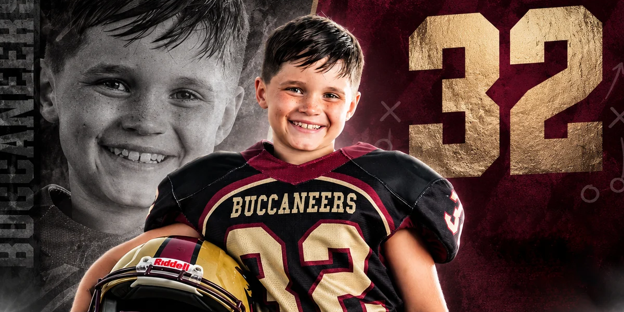
• Individual athlete banners celebrating senior players or standout performers
Each category has different production requirements. A permanent championship banner needs archival-quality materials that resist fading over years of indoor display. An event banner used outdoors for a single weekend has completely different substrate and finishing requirements. Ordering both from the same specification is a budget mistake that shows up quickly in durability.
What Makes a Sports Banner Work
The visual principles behind effective custom sports banners are more specific than most programs realize when they first approach the process.
Contrast drives readability at distance. Text and graphics need to work against the background color at the sizes people read them from, typically twenty feet or more, not from a design proof on a laptop screen. Banners that look sharp in proof form often become muddy once printed and hung.
Photography integration is the second major consideration. Banners incorporating athlete images or team photos are consistently more compelling than purely typographic designs. The source image quality needs to hold at the banner's printed dimensions. Screen-resolution images reveal pixelation when blown up to four feet by six feet. High-resolution source files are not optional.
Color fidelity matters more for banners than for most other print formats. School colors that shift between the jersey, the banner, and facility signage undercut the cohesion a strong identity system is supposed to project. Specifying Pantone or CMYK values produces more predictable results than relying on screen color matching.
Canonsburg Programs and the Local Visual Standard
Canon-McMillan and the surrounding Canonsburg area has a strong tradition of athletic investment. The facilities at Big Mac Stadium and the youth organizations feeding into the school's programs reflect that commitment. The standard for custom sports banners in Canonsburg, PA has risen alongside that investment.
Programs ordering banners locally benefit most from providers who understand the regional context. That means the school colors, the facility dimensions, and the athletic culture that makes certain design choices resonate with a local audience. Generic templates that could belong to any program anywhere tend to feel out of place in communities with a strong local identity.
Photography and Banners as a Combined Strategy
Programs that invest in professional photography have the source material to produce banners that genuinely reflect their athletes and their season. A championship banner built around a strong team portrait carries considerably more meaning than one built from stock imagery or a phone photo at the trophy presentation.
Planning photography and banner production together, rather than as separate unrelated line items, is one of the more effective things a program can do for its long-term visual identity.
Frequently Asked Questions
What materials are best for indoor championship banners?
Indoor championship banners typically use vinyl or fabric substrates with UV-resistant inks to prevent fading under facility lighting. Fabric banners hang more naturally and are less prone to curling at the edges. Grommets or sewn sleeves provide secure hanging options for high-ceiling installations.
How large should a sports banner be to be readable from the stands?
For gym or stadium installation, a minimum of 3 feet by 5 feet is recommended for banners read from 20 to 30 feet away. Banners displayed at greater distances benefit from a 4-foot by 6-foot format, with text sized at a minimum of 3 inches per character for readability.
What image resolution is needed for sports banner printing?
Source images should be a minimum of 150 DPI at the final printed size. For a 4-foot by 6-foot banner, the source file should be at least 7,200 by 10,800 pixels. Images exported from social media at screen resolution are almost always insufficient for large-format printing.
Can sports photography be used directly in banner design?
Yes, and the results are significantly stronger than stock imagery. Professionally shot game day coverage and portrait sessions produce files at resolutions suitable for banner printing. The photographer should confirm file specifications with the banner vendor before the session.
How far in advance should a program order custom sports banners?
Standard production timelines run two to three weeks from approved design proof to delivery. Programs ordering for specific events or senior nights should build in an additional week for design revisions. Rush production is available from most vendors but typically carries a significant cost premium.
Build a Visual Identity Worth Displaying
The banners hanging in a gym or stadium are a program's most visible long-term statement about itself. Programs in Canonsburg that treat banner production as a deliberate identity investment build facilities that feel like they belong to programs with real history and real standards. The difference between a well-designed banner and a generic one is visible from across the room.
Programs in Canonsburg looking to strengthen their visual identity with custom sports banners, backed by professional photography that meets print production standards, can connect with Sean Conner to explore what that partnership looks like in practice.