Football Action Photography: Capturing the Game That Runs Deepest in Western PA
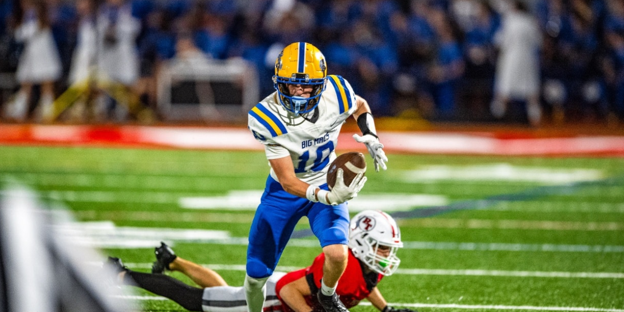
Friday night lights mean something different in western Pennsylvania than they do in most parts of the country. Football here is not just a sport; it is part of the regional identity, woven into communities across Allegheny, Washington, and Westmoreland counties. When the lights come on and the helmets hit the field, the moments that unfold deserve better than a blurry phone photo from row twelve. Quality football action photography is about honoring what these athletes are putting on the line every single game, and creating something their families will still care about decades from now. Photo Dad Sports Photography, based in Canonsburg, PA, is built around exactly that mission.
Why Football Is a Photographer's Most Demanding Sport
Football gives a photographer almost nothing to predict with certainty. The ball can end up on any yard line after any snap. Action explodes from both sides of the line simultaneously. Players in motion create overlapping frames of reference that can make or break a composition in real time.
Add to that the typical shooting environment: outdoor stadiums in October and November, with cooling temperatures, inconsistent artificial lighting at night games, and the physical challenge of moving along the sidelines while staying out of play. Professional sports photographers who shoot football regularly will tell you it demands more lateral movement, more anticipatory positioning, and more real-time decision making than nearly any other sport.
Night games under stadium lights create additional technical complexity. The combination of high ISO requirements and the color temperature of artificial lighting at the high school level means many venues present conditions that consumer camera equipment simply cannot handle well. Experienced photographers shooting football professionally have calibrated their equipment and technique specifically for these environments.
The Moments That Define Great Football Action Photography
Every sport has its signature images. In football, the moments that carry the most visual power tend to fall into a few consistent categories:
• The break: A running back finding the gap and accelerating through, captured at the precise instant their body language communicates the open field ahead
• The catch: A receiver fully extended, eyes locked on the ball at the highest point of the jump
• Contact at the line: Offensive and defensive linemen engaging at the snap, where strength and technique meet in a brief, chaotic frame
• The quarterback's delivery: The coil of the throwing motion, ball visible, mechanics at full extension
• Sideline celebrations: Teammates erupting after a score, where the collective emotion of the team is suddenly visible in a single frame
Capturing these moments requires a photographer who watches the game intelligently, not just the action. Knowing the down, distance, and offensive tendencies gives a photographer the positioning advantage that separates strong sports photography from reactive snapshots.
Football Team Photography That Goes Beyond the Lineup
The traditional team photo format still has a place. But the programs and families that are getting the most out of their football team photography investment are asking for more than rows of standing players.
Modern football team photography often includes:
• Dramatic low-angle group shots that communicate physicality and scale
• Position group images, offensive unit and defensive unit photographed separately with position-appropriate staging
• Individual position portraits that reflect the role each player fills
• Pre-game warmup and tunnel images that capture the team in game-ready mode
• Coaching staff photography that acknowledges the program leadership
Programs that invest in quality football team photography build visual archives of their seasons that serve recruiting, community engagement, and school pride simultaneously. These are not just nice-to-have images. For a high school program with championship aspirations, they become part of how the team presents itself to the outside world.
Night Game Challenges and How Professionals Handle Them
A significant portion of high school football in western Pennsylvania happens under the lights. Friday night games with stadium lighting present a specific set of photographic challenges that come up repeatedly for any photographer working this market:
• Light intensity varies dramatically across the field, with bright spots near the 50-yard line and significantly darker conditions near the end zones
• Artificial stadium lighting creates color casts that require careful white balance management in post-processing
• High ISO settings needed in lower-light situations introduce image noise that must be managed without sacrificing sharpness
• Fast-moving players in inconsistent light require continuous autofocus systems that can track motion accurately across variable exposure conditions
Photographers who shoot regularly in these environments develop settings profiles and post-processing workflows tuned specifically for their local venues. That kind of venue-specific knowledge is not something a first-time or visiting photographer walks in with. It accumulates over multiple seasons of showing up to the same fields and learning their particular characteristics.
Positioning, Access, and What Changes Everything
Where a photographer stands during a football game is often the deciding factor in whether they come away with strong images or mediocre ones. The best angles are not always the most obvious ones, and accessing them often requires preparation before kickoff.
Experienced photographers working high school football generally establish two or three primary positions based on the game situation. During passing downs, positioning behind and slightly to the side of the quarterback creates the compression perspective that makes throws and catches look most dramatic. During running plays, a position along the interior of the line of scrimmage at field level captures the physicality of the game in a way no elevated angle can replicate.
Communicating with athletic directors and game officials before the game makes it possible to access positions that produce significantly better results. That relationship-building aspect of sports photography is easy to overlook but crucial in practice.
What to Expect From a Professional Football Photo Session
Whether the shoot is a team photo day or game-day action coverage, a professional football photography session should feel organized and purposeful. Here is what that typically looks like in practice:
• Pre-shoot communication with the coach or athletic director to align on goals, timing, and logistics
• Early arrival to establish positioning, assess light conditions, and identify angles
• A structured flow for team portraits that respects player and coaching staff time
• Active sideline coverage during game action with consistent repositioning based on game flow
• A post-session editing workflow that delivers fully processed images within an agreed timeline
• A digital gallery organized for easy browsing, selection, and ordering
Photo Dad Sports Photography has developed a process for local high school and youth football programs that removes the friction and delivers the results. The goal is always the same: images that do justice to what these athletes accomplish on the field.
Frequently Asked Questions
What camera settings are used for football action photography at night games?
Professionals typically shoot night games at ISO 3200 to 6400, shutter speeds of 1/800th to 1/1250th of a second, and wide apertures around f/2.8. These settings balance the need to freeze motion with the available light from stadium fixtures. Post-processing handles noise reduction and white balance correction.
When should a football program book team photography?
Pre-season is ideal, typically 2 to 4 weeks before the first game, while rosters are finalized and uniforms are still clean. Some programs schedule team photos at the midpoint of the season or after conference championships when the team has accomplished something together. Both approaches have merit depending on what the program wants to document.
Can football action photos be used in college recruiting?
Yes, and increasingly so. Coaches at the college level review recruiting profiles that include action imagery, and a strong photo of a player in a game environment communicates athletic presence more vividly than a headshot. Action photos showing technique and physical engagement are particularly valuable for skill position players.
How many players can be included in a football team portrait session?
A well-run team portrait session can accommodate a full roster of 40 to 60 players in 2 to 3 hours when the flow is organized correctly. Larger programs may require additional time or a second session date. Coordinating with the photography team in advance ensures realistic expectations on both sides.
What is the difference between game-day football photography and a studio-style team portrait session?
Game-day photography captures authentic athletic action in context, used primarily for individual athlete promotion and editorial purposes. Studio-style team portraits involve controlled lighting, deliberate composition, and structured lineup formats, producing the more formal images used for programs, yearbooks, and display purposes. Most complete packages include both.
In western Pennsylvania, football is not background noise. It is the main event on Friday nights across dozens of communities from Canonsburg to Pittsburgh and beyond. The athletes playing those games deserve photography that matches the seriousness with which they approach their sport. Sean Conner at Photo Dad Sports Photography understands that, and it shows in every image delivered to families and programs across the region.